


Certain phrases are understood everywhere, crossing language barriers. One such phrase is a quick, instinctive reaction to making a mistake. Despite being casual, this common expression is very important in language.
This universal phrase pops up when we suddenly know we’ve made a mistake. It’s quick, skipping over the usual way we think about words. It’s like a verbal automatic response to surprises.
Why this exact phrase became so common is really interesting. It shows a lot about how we think and talk. Its success comes from how it makes us feel and how short it is.
This introduction looks into why this phrase is so common. We’ll dive into its psychological roots and how it’s used around the world. We’ll keep our analysis serious but also acknowledge its casual nature.
The Historical Roots of “Oh Shit”
The phrase “oh shit” has a long history. It shows how language and culture change over time. It went from being a swear word to something we use every day.
Early Recorded Usage
Medieval times saw a lot of talk about bodily functions in English. The exact phrase “oh shit” wasn’t used back then. But, similar words were used in jokes and insults.
Medieval and Renaissance References
In the medieval era, talking about bodily functions was common. Geoffrey Chaucer’s Canterbury Tales is full of such references. These were seen as rude today.
Renaissance writers also used earthy language. They aimed to connect with people in a way that felt real. This laid the groundwork for phrases like “oh shit” to become part of everyday speech.
Related Posts:






Evolution Through Centuries
The phrase “oh shit” shows how our views on language have changed. What was once forbidden is now widely accepted. This change came from shifts in culture and how we talk to each other.
Several things helped this change:
- Urbanisation and mixing of social classes
- Increasing informality in public discourse
- Changing attitudes toward bodily functions
From Taboo to Mainstream Acceptance
The 20th century was a big turning point for taboo language. World Wars brought soldiers from different backgrounds together. This helped spread phrases like “oh shit” to more people.
After the wars, media and entertainment made it okay to use such words. Comedians and writers started using them more freely. This showed and helped change how society viewed such language.
By the late 20th century, “oh shit” was no longer seen as taboo. Its journey shows how language and culture go hand in hand.
Linguistic Anatomy of the Phrase
The phrase “oh shit” is a great example of how language works. It mixes sound patterns and grammar to express strong emotions.
Phonetic Properties and Impact
The sound of “oh shit” grabs your attention right away. The “oh” sound sets up a pause, then the sharp “sh” and “t” sounds hit you hard.
This sound mix is called a “plosive-stop” combination. It’s like the sudden release of emotion when you say it.
The Science of Sharp Consonants
Consonants like /ʃ/ and /t/ are special. They make sounds that grab your attention quickly. These sounds are like high-frequency bursts that catch your ear.
Here’s a table showing the sounds in “oh shit” and their acoustic properties:
| Sound | Type | Frequency Range | Perceived Sharpness |
|---|---|---|---|
| /oʊ/ | Diphthong | 300-800 Hz | Low |
| /ʃ/ | Fricative | 2000-4000 Hz | High |
| /ɪ/ | Short Vowel | 400-600 Hz | Medium |
| /t/ | Plosive | Broad Spectrum | Very High |
Grammatical Classification
“Oh shit” is clearly an interjection. This grammatical classification means it’s a word that expresses emotion but doesn’t fit into a sentence.
Interjections are different from regular words. They stand alone to express feelings, not as part of a sentence.
Interjections in English Syntax
In English, interjections have their own place. They can start, middle, or end sentences without changing the sentence’s meaning.
This flexibility makes phrases like “oh shit” useful in many ways:
- As standalone emotional expressions
- As sentence starters to highlight what comes next
- As emphatic additions after a statement
The interjection category shows how language lets us express emotions freely, alongside structured messages.
Psychological Underpinnings
Research shows that ‘oh shit moments’ trigger specific brain paths for spotting mistakes. These moments are key, where our brain’s systems quickly respond. The phrase is a sign and tool in how we deal with errors.
Immediate Cognitive Response
When we spot a mistake, our brain quickly starts a series of actions. This fast cognitive response uses special brain networks to notice when things don’t go as planned. The part of the brain called the anterior cingulate cortex is especially active during these times.
Brain Processes During Mistake Recognition
Studies using brain imaging show that the prefrontal cortex gets very active right after we notice an error. This area is key for making decisions and solving problems. At the same time, the amygdala deals with the emotional impact of the mistake.
The brain’s error signal peaks just before we say something. This signal is like an internal alarm. It gets us ready to change our actions and process our feelings.
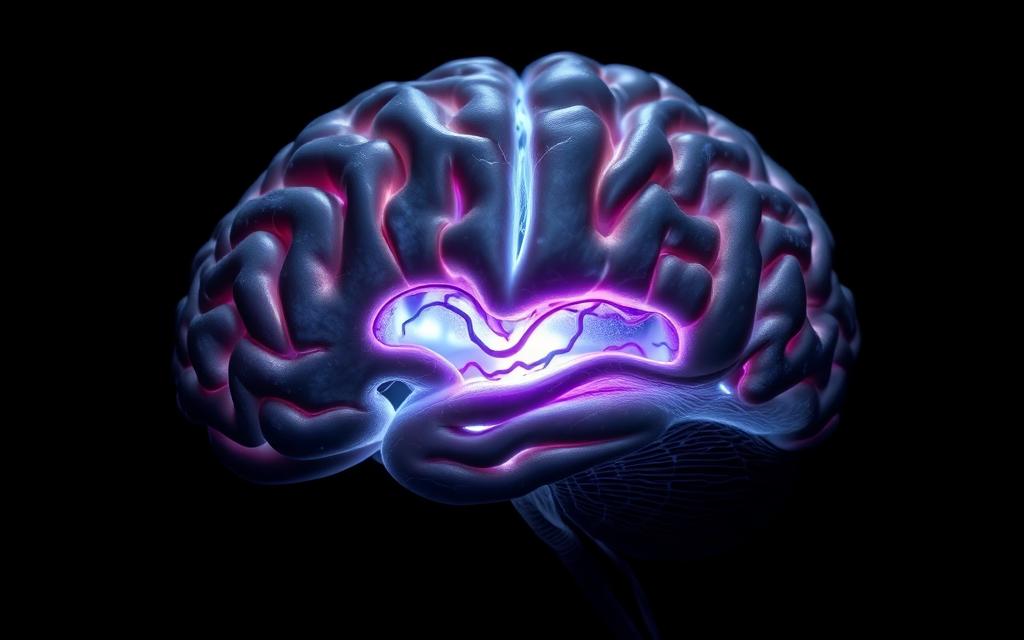
Research has found this brain pattern in many people and cultures. It shows a basic way we all respond to mistakes. Saying ‘oh shit’ usually happens within half a second after this brain activity starts.
Emotional Catharsis Mechanism
Saying ‘oh shit’ helps us release emotions by showing we’re vulnerable. This emotional catharsis helps us manage our feelings. It turns internal stress into something we can talk about.
Stress Relief Through Verbalisation
Talking about mistakes lowers stress hormones like cortisol. Studies show that acknowledging mistakes can reduce these hormones. This stress relief helps prevent anxiety from building up.
By saying ‘oh shit’, we create distance from the mistake. This makes it easier to deal with, rather than taking it personally. This approach helps us recover faster and better.
This way of dealing with mistakes is similar to therapy that encourages talking about feelings. Saying ‘oh shit’ opens the door for moving forward. Many psychologists believe these moments can lead to positive changes if we handle them right.
“Oh shit moments often become turning points where individuals choose growth over avoidance.”
The phrase’s power comes from being both a sign of error and a way to release feelings. It captures the brain’s recognition and emotional response at the same time. This makes it very effective for processing our feelings.
Cross-Cultural Universality
The phrase “oh shit” is found in many cultures, showing how emotions are shared worldwide. It’s a common way to express shock or surprise, proving that humans share similar feelings through language.
Global Equivalents and Parallels
Every language has its own version of this exclamation. For example, “merde!” in French and “scheiße!” in German both mean the same thing. Spanish and Italian speakers use “¡mierda!” and “merda!” respectively, showing a pattern in Romance languages.
Similar Expressions Worldwide
Outside of Europe, similar expressions exist. In Japanese, “しまった!” (shimatta) is used without the bad meaning. Russian speakers say “блядь!” and Mandarin Chinese has ” !” (zāogāo).
These global equivalents are short, intense, and easy to understand. They act like a quick stop sign in conversations, marking a moment of surprise or error.
Cultural Acceptance Variations
Even though these expressions are common, how acceptable they are varies. In some places, they’re not allowed, while others see them as part of everyday talk.
Social Norms and Taboo Strength
In Scandinavian countries, strong language is more accepted. In contrast, many Asian cultures keep polite and impolite speech separate. The US has mixed views, with different places and ages having different standards.
Studies link the taboo strength to historical views on the body and religion. A linguistic study found that the internet has made these expressions more global.
Internet memes and viral phrases show how these expressions connect cultures. The “oh shit not again” meme, for example, highlights how we all share similar moments of surprise.
This shows that making mistakes, facing surprises, or realising errors is a universal human experience. We all express these feelings in similar ways, through language.
Contextual Applications
The phrase “oh shit” marks the moment we know we’ve made a mistake. It’s used everywhere, from our homes to work. It’s a key moment for taking action to fix things.

Everyday Domestic Scenarios
At home, we often say “oh shit” when something goes wrong. These moments can really upset our plans for the day.
Common Household Mistakes
Some common mistakes at home include:
- Spilling drinks on important papers
- Forgetting to pay bills on time
- Finding out food has gone bad
- Deleting important files by mistake
These small mistakes can really mess up our day. Saying “oh shit” helps us start fixing the problem.
Professional Environments
At work, saying “oh shit” usually means we’ve made a big mistake. These mistakes can affect our jobs or the company’s success.
Workplace Slip-Ups and Recoveries
Workplaces face unique challenges where mistakes can have big effects. Common mistakes include:
| Error Type | Typical Scenario | Recovery Strategy |
|---|---|---|
| Communication Errors | Sending emails to the wrong person | Quickly sending a correction |
| Data Management | Making mistakes in spreadsheets | Checking the data carefully |
| Scheduling Issues | Missing deadlines | Re-evaluating priorities |
| Financial Oversights | Making budget mistakes | Reviewing and adjusting expenses |
Fixing mistakes at work often means being open and fixing things clearly. First, we might feel upset, but then we start to find solutions.
Many people find that admitting mistakes helps their teams work better together. It shows we’re all in this together and helps us solve problems as a team.
Social Perception Evolution
The journey of “oh shit” from taboo to mainstream shows how language changes. This shift shows how society views and uses words in everyday talk.
From Vulgarity to Acceptance
Originally seen as very offensive, “oh shit” has changed a lot. Its shift shows how we now see informal talk differently.
Changing Language Standards
Language rules have relaxed a lot in recent years. What was once off-limits in polite talk now shows up often in our chats.
This change shows how our norms adjust to today’s values. Language normalisation happens slowly as more people accept certain words.
- Generational differences in language tolerance
- Increased informality in social interactions
- Broader acceptance of emotional expression
- Changing definitions of appropriate language
Media Influence on Normalisation
Media has greatly changed how we see once-offensive words. The entertainment world plays a big part in this.
Cinematic and Television Portrayals
TV and movies have helped make “oh shit” more common. Seeing it in movies and shows makes it seem less bad.
This media effect creates a cycle where more use leads to more acceptance. Seeing these words in action makes them part of our everyday talk.
The table below shows key moments in media’s role in making the phrase normal:
| Time Period | Media Representation | Social Impact | Acceptance Level |
|---|---|---|---|
| 1970s-1980s | Limited usage in edgy comedies | Shock value, counter-culture appeal | Low acceptance |
| 1990s-2000s | Mainstream comedy and drama inclusion | Growing familiarity, reduced stigma | Moderate acceptance |
| 2010s-Present | Widespread casual usage across genres | Normalisation, everyday vernacular | High acceptance |
This change shows how media slowly changes what we think. The way shows use real talk has made taboo words more accepted.
As media keeps showing real human talk, language will keep changing. This ongoing shift keeps our words fresh and in tune with culture.
Variations and Adaptations
The phrase “oh shit” shows how language changes in different places and cultures. It lets people express themselves while fitting in with local rules and tastes.
Regional Linguistic Differences
English spoken around the world has its own special ways of saying “oh shit”. These changes show how local sounds and cultures shape language.
Dialectical Variations Across English
In Britain, people say “oh shite” instead. It keeps the same meaning but sounds different. In Australia, “oh shit” is used with a unique twist. The Southern United States stretches out the vowels for extra emphasis.
Canada’s English is a mix, sometimes using British words but with American sounds. This shows how language grows in different places.

Polite Alternatives and Euphemisms
In polite settings, people use softer versions of “oh shit”. These milder phrases help avoid upsetting others.
Socially Acceptable Substitutions
Words like “oh shoot,” “darn it,” and “oh bother” are good choices. They keep the feeling but are polite. The right word depends on who you’re talking to and where you are.
In some places, funny alternatives like “sugar!” and “fudge!” are used. At work, people might say “oh dear” or “that’s unfortunate” instead.
| Region | Common Variation | Formality Level | Typical Context |
|---|---|---|---|
| British English | Oh shite | Informal | Casual conversations |
| American English | Oh shoot | Semi-formal | Mixed company settings |
| Australian English | Oh shit (distinct accent) | Informal | Everyday use |
| Canadian English | Oh shoot/darn | Neutral | Various social situations |
| International English | Oh snap | Informal | Youth and online communication |
These changes show how language balances being real with being polite. As cultures change, so does how we talk.
Humour and Comedic Value
The phrase “oh shit” is more than just a shock. It turns panic into laughter for everyone. It’s a way to laugh at our mistakes together.

Relatability in Comedy
Comedy works when we see ourselves in it. When “oh shit” is said in movies or TV, we feel it too. It’s a real moment of realisation.
This phrase is real. It’s not scripted. So, it feels true and makes us laugh more.
Shared Human Experience
We’ve all had those moments where “oh shit” sums up how we feel. This shared feeling makes us laugh together.
It shows we all make mistakes. And sometimes, laughing is the best way to deal with them.
Internet Memes and Viral Content
The internet loves “oh shit” memes and viral content. These make us laugh together online. They spread fast on social media.
It’s short and hits the mark. We get the joke right away, without needing more.
Digital Culture Appropriation
Online, “oh shit” is used in many funny ways. A meme about Mandar Kokate is a great example.
This meme shows Kokate getting surprised over and over. People add “oh shit not again” to make fun of repeated mistakes.
This meme shows how the internet turns moments into jokes. It’s about laughing at our shared frustrations.
Viral “oh shit” moments make us laugh because they’re relatable. They’re about work mishaps, accidents, or social blunders. They bring us together in laughter.
Interpersonal Dynamics
In the world of human relationships, ‘oh shit’ is a powerful phrase. It can turn awkward moments into chances for real connection. When used honestly, it shows we’re ready to be open and honest with each other.
Relationship Building Through Vulnerability
Sharing our mistakes can bring people together. Saying ‘oh shit’ is like waving a white flag. It shows we’re imperfect and invites others to be kind instead of critical. This vulnerability shows we value being real over being perfect.
Studies show that when we accept our shared flaws, our relationships grow stronger. As one expert notes:
“The fastest way to build trust isn’t through shown skill, but through admitted weakness. Nothing connects us like a shared ‘oh shit’ moment.”
Authentic Communication Moments
These unplanned moments break down our masks. Unlike scripted apologies, ‘oh shit’ is raw and true. It leads to authentic communication where:
- Our guards drop
- We understand each other faster
- Our emotional walls crumble

The phrase’s strength is in its honesty. It’s like a mental clean-up where we show our true selves. This openness often leads to honest responses, making our bonds stronger.
Conflict Resolution Applications
In tough times, ‘oh shit’ can be a peace offering. Admitting mistakes can calm conflicts by:
- Showing we take responsibility
- Listening to the other side
- Working together to solve problems
This way, arguments turn into teamwork. The phrase acts like a reset button, stopping negative cycles and starting conversations.
Diffusing Tense Situations
Experts in mediation see how ‘oh shit’ changes the game. In work or personal fights, it can do more than long explanations. It shows conflict resolution skills through feeling rather than words.
Its power comes from being non-threatening. Unlike formal apologies, ‘oh shit’ just says: “I see this and my part in it.” This makes it safe for everyone to move forward without blame.
In the end, mastering people skills isn’t about avoiding mistakes. It’s about handling them with grace and truth. The simple ‘oh shit’ helps us build stronger, more honest connections.
Oh Shit in the Digital Age
The digital world has changed how we react to mistakes. Our words of surprise and frustration now fit new ways of talking online. This change is because our lives are more online than ever.
Text-Based Communication
“Oh shit” has grown in the digital world. It shows up a lot in messages, social media, and emails. It’s like a digital sigh of frustration.
Emoji and Abbreviation Usage
The poop emoji (💩) often goes with “oh shit” to add fun. It makes the phrase less serious. People also use “OS” or “o/s” to save time in quick chats.
This shows how new digital shortcuts have formed. They keep the phrase’s feeling real but fit in with online limits.
Technological Contexts
Technology often leads to “oh shit” moments. Things like dropped calls or lost work are common. Our digital tools can cause a lot of frustration.
Software and Hardware Errors
When tech fails, “oh shit” is the usual reaction. It’s seen in IT chats, developer forums, and complaints about tech problems. It marks the start of fixing the issue.
Social media makes these moments more public. People share their tech troubles with funny memes. This creates a sense of community around common tech frustrations.
The digital age has not made “oh shit” less common. Instead, it has given it new ways to be used. It still helps us express our reactions to mistakes.
Educational Perspectives
Educators now see the benefits of mistakes in learning. These moments, filled with colourful words, are chances for growth, not just errors.
Learning Through Mistakes
Learning is all about spotting and fixing mistakes. When students realise they’ve made a mistake, it boosts their memory and understanding.
Pedagogical Value of Error Recognition
Today’s teaching focuses on the pedagogical value of students finding their own mistakes. This method builds stronger learning paths than just being told what’s wrong.
Studies show that spotting mistakes on their own helps students remember 40% more than being told. These moments are powerful for learning.
Good teachers turn mistakes into learning chances. They make it a positive part of the learning process.
Child Development Aspects
Childhood is full of interesting ways kids learn from mistakes. These moments are part of their language and thinking growth.
Language Acquisition and Social Learning
Kids pick up words and phrases by watching and learning from others. When they say something out of the blue during a mistake, it shows they’re learning about cause and effect.
This language growth is key for kids. It helps them deal with frustration, show they know they’ve made a mistake, and ask for help.
These moments are also social. Kids learn from their own mistakes and by watching others make and correct theirs. This makes learning a shared experience.
Classrooms that value these moments create better places for kids to grow. They see that learning is tied to feelings and social interactions.
Conclusion
The journey of “oh shit” from a taboo to a widely accepted phrase is fascinating. It shows how language evolves and adapts. This phrase has become a key part of how we communicate.
Understanding why “oh shit” is so popular helps us see its power. It’s a quick way to express shock or surprise. It works across different cultures and situations, making it a universal expression.
In work settings and online, “oh shit” still has its place. It has changed but keeps its core meaning. As this analysis points out, it’s perfect for moments when things suddenly change.
This summary highlights “oh shit’s” role in making us laugh, learn, and connect. It’s more than just slang; it’s a reflection of our shared human experiences. Its ability to fit into new situations shows it will remain important for years to come.
